2026-10-15 ·
Preventing Secondary Mold Issues After Flooding in San Ysidro
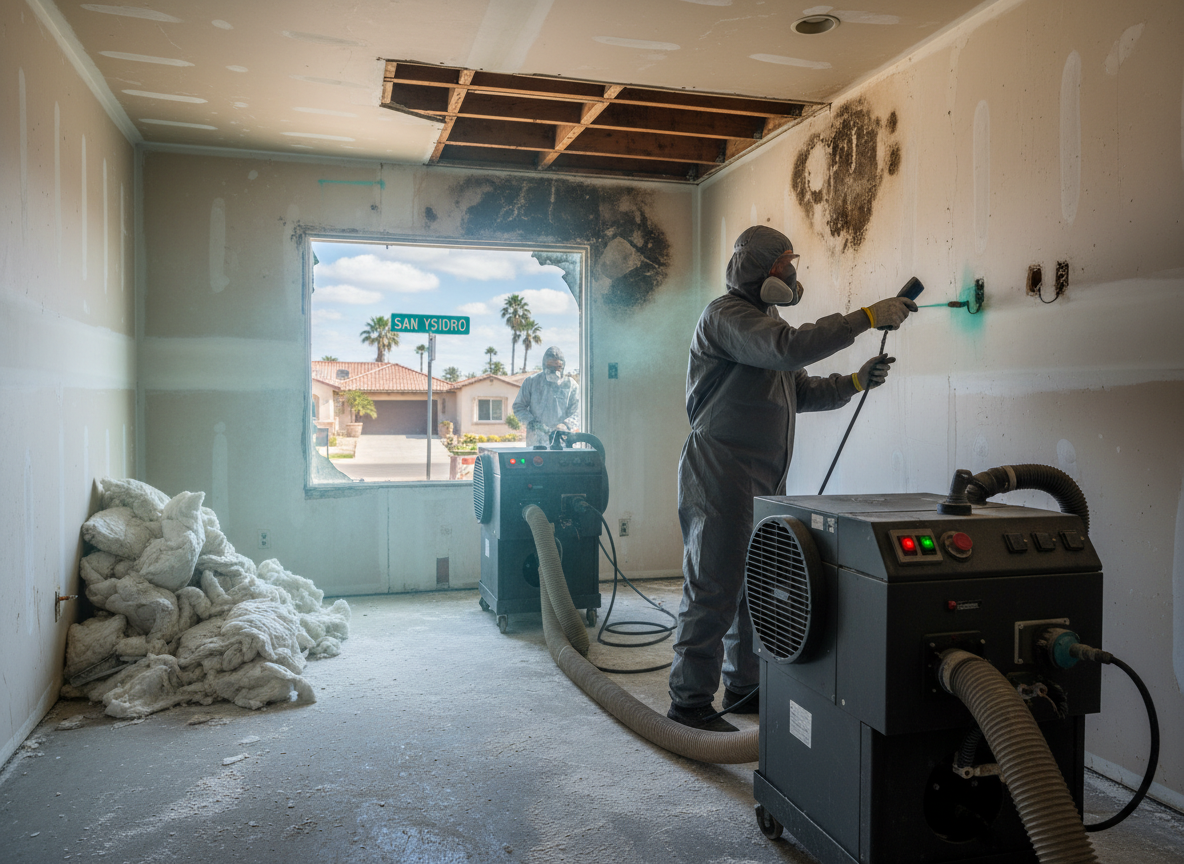
Preventing secondary mold after flooding in San Ysidro starts with beginning the drying process within 24 to 48 hours before spores take hold in the mild coastal Mediterranean climate of San Diego County.
Understanding Local Flooding and Mold Risks
San Ysidro properties in Downtown San Ysidro and the San Ysidro Port of Entry area often feature older wood-frame homes and stucco exteriors built decades ago that absorb water quickly during heavy rains. The mild Mediterranean climate keeps humidity levels elevated year-round, especially when moisture lingers near Larsen Field or flows from higher terrain toward the border crossing. This combination allows mold to colonize within two days on drywall, subfloors, and insulation. Residents in nearby Chula Vista and National City face similar patterns where seasonal storms push water into crawl spaces and wall cavities. Effective prevention focuses on removing standing water first, then addressing hidden pockets before they support growth. Properties here benefit from prompt extraction because the local soil retains moisture longer than inland areas, extending the window for secondary issues if left unchecked.
Rapid Water Extraction and Initial Drying
Begin with thorough water extraction using professional pumps and vacuums to pull moisture from carpets, pads, and flooring in San Ysidro homes. Focus on areas around the San Ysidro Port of Entry where flooding often enters through low-lying entries and garages. Once bulk water is gone, deploy air movers and dehumidifiers set to maintain indoor humidity below 50 percent. In the coastal climate, run equipment continuously for at least 72 hours while monitoring with moisture meters on concrete slabs and wood framing common to local construction. Water damage mitigation techniques tailored to San Diego County conditions prevent moisture from migrating into adjacent rooms. Check under sinks and behind appliances in older Downtown San Ysidro kitchens where leaks combine with floodwater. Consistent airflow across all affected surfaces stops the conditions that allow mold to establish on organic materials within walls.
Addressing Hidden Moisture in San Ysidro Structures
Hidden moisture in attics, crawl spaces, and wall cavities poses the biggest risk for secondary mold in San Ysidro's older housing stock. Use infrared cameras and pin meters to locate damp spots in plaster and drywall that standard fans miss. The Mediterranean climate slows natural evaporation, so properties near the Port of Entry often need targeted ventilation added to existing windows and vents. Detecting hidden moisture in San Ysidro properties guides residents through systematic checks of baseboards and ceiling joints after flooding. Remove and replace saturated insulation promptly because it holds water for weeks. In National City and Chula Vista border homes, check shared walls and utility penetrations where moisture travels between units. Document readings daily to confirm levels drop below 15 percent moisture content before closing cavities.
Ongoing Monitoring and Ventilation Practices
Continue monitoring humidity and temperature for 10 to 14 days after initial drying in San Ysidro homes to catch any rebound moisture from the coastal air. Place data loggers in multiple rooms and inspect at 48-hour intervals, especially during periods when marine layers increase ambient humidity. Improve ventilation by running bathroom and kitchen exhaust fans longer than usual and opening windows when outdoor conditions allow. For severe cases that involve sewage or prolonged saturation, mold remediation after water damage becomes necessary to remove affected materials safely. Track progress with photos and meter readings so any new growth appears early. This approach works well for the mix of single-family homes and multi-unit buildings found throughout the San Ysidro Port of Entry area.
Long-Term Steps to Reduce Future Mold Risk
After the immediate threat passes, improve drainage around foundations in San Ysidro properties by clearing gutters and extending downspouts away from the structure. Seal exterior cracks common in older stucco near Larsen Field to limit water entry during future storms. Schedule annual inspections of crawl spaces and attics to catch small issues before they combine with flooding. Residents who follow these steps reduce the chance of repeated mold problems in the mild climate that keeps surfaces damp longer than drier regions. Consistent attention to these details protects homes in Downtown San Ysidro and surrounding neighborhoods from the cycle of water damage and secondary growth.