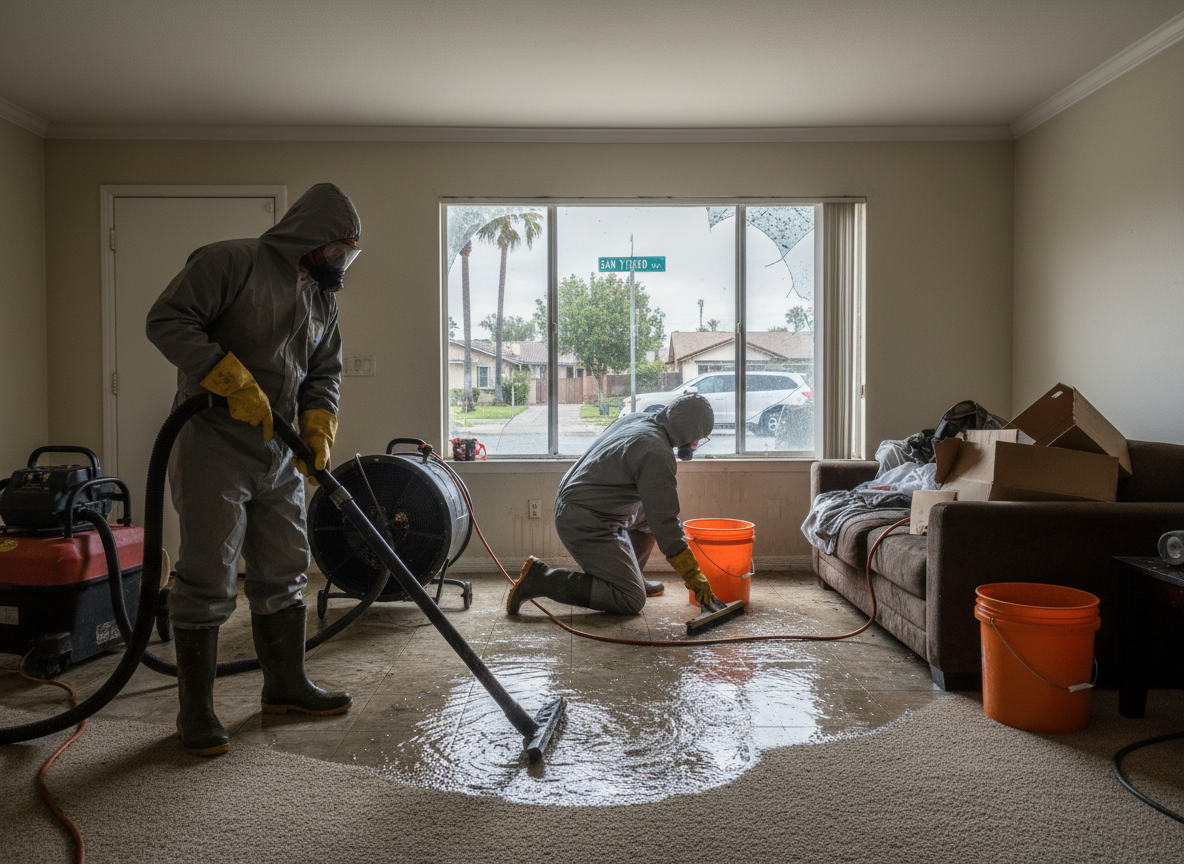
San Ysidro's older housing stock around Downtown and the San Ysidro Port of Entry area often features slab foundations and stucco exteriors that trap moisture after leaks or storms. In the mild coastal Mediterranean climate, humidity lingers and prevents natural evaporation, so water can migrate into subfloors and walls before homeowners notice. Technicians must extract standing water quickly then use targeted dehumidification to avoid mold in these tight spaces common near Larsen Field.
Jobs in nearby Chula Vista and National City frequently involve shared walls in multi-unit buildings where water travels between units. Edge cases include hidden leaks at the Port of Entry area where older plumbing meets newer municipal lines, creating pressure issues that push water into unexpected cavities. Extraction equipment must account for the flat terrain and occasional high water table that keeps soil saturated, requiring extra passes with moisture meters to confirm dry readings before any reconstruction.
Code considerations in San Diego County include proper disposal of contaminated water to protect local drainage systems that feed into the border region. Homeowners should never attempt DIY removal with box fans alone because the persistent coastal moisture allows hidden growth behind baseboards within days. Professional teams document moisture levels at multiple depths in drywall and concrete to meet insurance requirements while protecting the property from secondary damage.
Technician insight
In San Ysidro, the thing that catches most people out with Emergency water removal is how the mild coastal Mediterranean climate keeps humidity high enough that slab foundations in Downtown homes never fully dry on their own, letting moisture wick into adjacent units near the Port of Entry.
Port of Entry Area Slab Leak
Water from a failed supply line spread under a slab in a San Ysidro Port of Entry area duplex. Extraction revealed trapped moisture along shared walls that had already reached the neighboring unit. Targeted drying and monitoring prevented mold growth across both properties.
How it works
- 1
Arrival and Assessment
Technicians reach the site within the service window and map water migration through slabs and walls using meters.
- 2
Water Extraction
Standing water is removed with portable pumps and wands suited to the confined layouts common in San Ysidro homes.
- 3
Drying and Monitoring
Air movers and dehumidifiers are placed while daily moisture readings track progress in the humid coastal air.
- 4
Final Verification
All affected materials are checked again before equipment removal to confirm the structure meets dry standards.
Pricing
Cost depends on water volume, affected square footage, and access in older San Ysidro construction; upfront quotes provided after inspection.