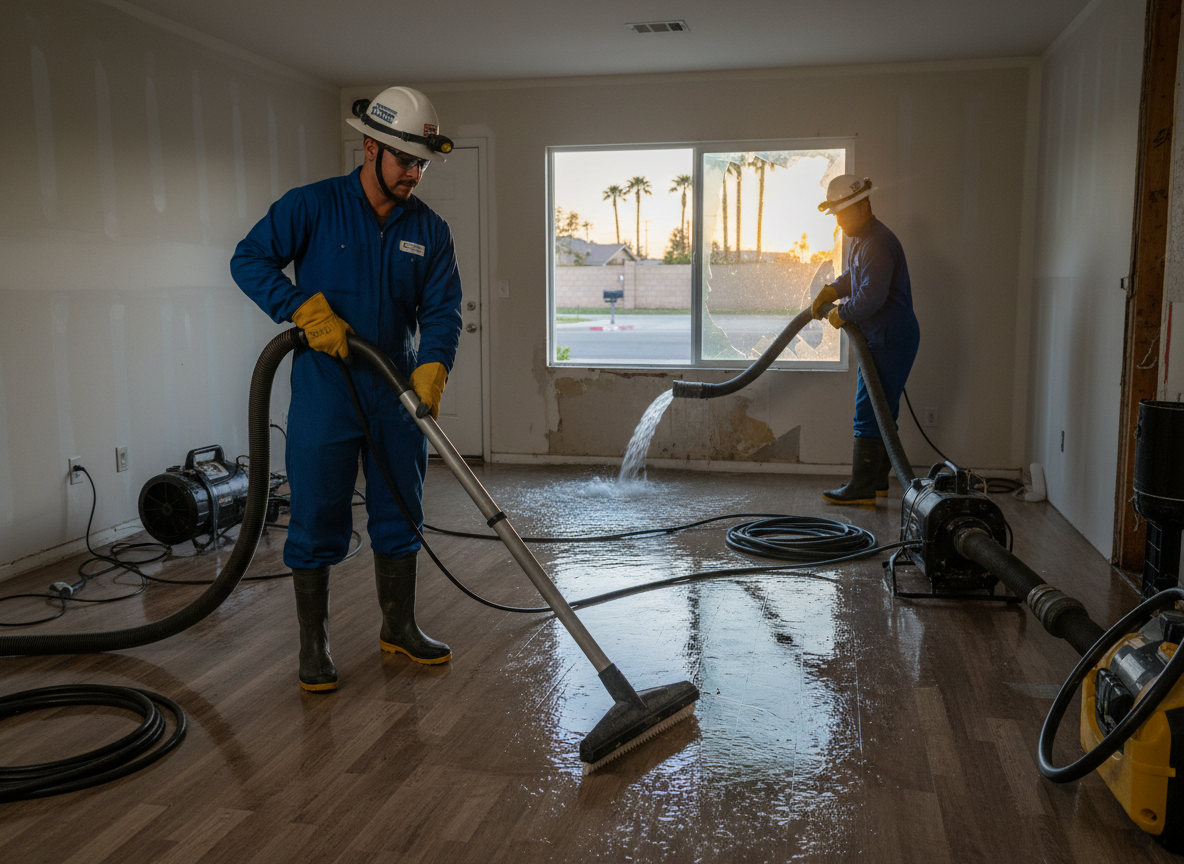
Water extraction in San Ysidro often starts with locating hidden moisture in older slab-on-grade homes common throughout Downtown San Ysidro and near the San Ysidro Port of Entry. These structures, many built before modern vapor barriers became standard, allow water to travel under concrete and into wall cavities when pipes fail or rain overwhelms drainage. Technicians use moisture meters and thermal imaging to map saturation before any pumps or vacuums run, because pulling surface water alone leaves residual dampness that the area's mild coastal Mediterranean climate keeps from drying naturally.
Heavy winter rains combined with the clay-rich soil around Larsen Field can back water up against foundations in both residential blocks and commercial buildings near National City and Chula Vista borders. Extraction crews must account for this slow percolation by placing equipment on multiple levels and monitoring relative humidity inside enclosed spaces for days after initial removal. Failure to address sub-slab moisture here frequently leads to recurring musty odors and drywall damage weeks later.
San Ysidro's proximity to the border crossing also means many properties sit on small lots with limited access for large equipment. Crews often work with portable extractors and directed air movers to reach tight utility rooms or garages without blocking driveways. Documenting every step protects both the property owner and the restoration team when insurance adjusters review claims for water events tied to aging plumbing common in the neighborhood.
Technician insight
In San Ysidro, the thing that catches most people out with water extraction is how clay soil near Larsen Field and the Port of Entry keeps moisture trapped under older slabs long after surface water is gone, especially in the mild climate that never fully dries the air.
Kitchen Leak in Downtown San Ysidro
A pipe failure under a kitchen floor sent water across the slab in a Downtown San Ysidro home. We located saturation extending into adjacent rooms due to the local soil and foundation design. Extraction equipment ran for three days with targeted drying to reach safe moisture levels. The homeowner avoided mold issues and returned to normal use without further demolition.
How it works
- 1
On-Site Assessment
Technicians arrive within hours, map moisture with meters, and identify affected materials in San Ysidro homes.
- 2
Water Removal
Portable pumps and extraction wands pull standing water from slabs, carpets, and wall cavities without spreading contamination.
- 3
Drying Setup
Air movers and dehumidifiers are positioned based on local humidity patterns to pull remaining moisture from stucco and concrete.
- 4
Final Verification
Moisture readings are rechecked and documented before equipment removal to confirm the structure meets dry standards.
Pricing
Pricing depends on water volume, access constraints, and drying duration; we provide an upfront scope before work begins.