2026-10-15 ·
Detecting Hidden Moisture in San Ysidro Properties
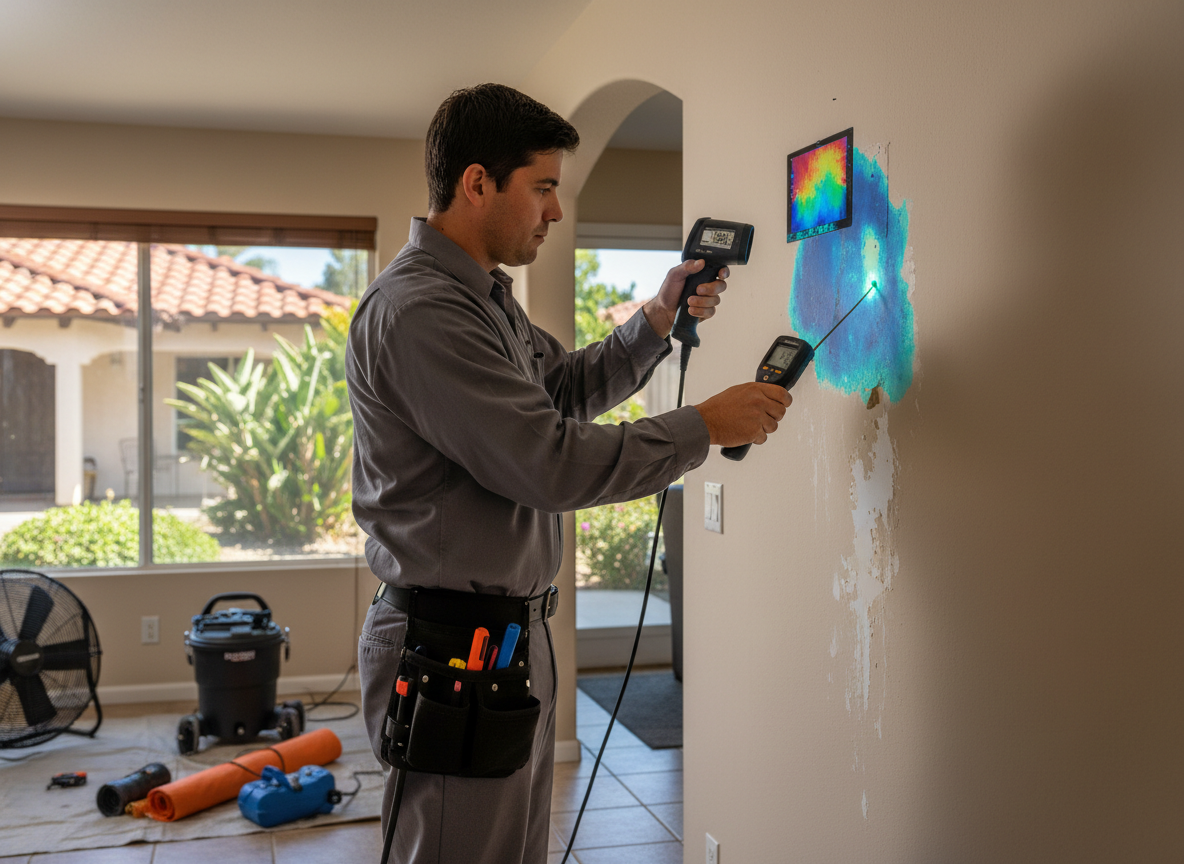
Hidden moisture in San Ysidro properties often appears first in walls and subfloors near older plumbing lines common in homes built around the San Ysidro Port of Entry area. Property owners detect it by checking for musty odors, slight discoloration on drywall, or warped baseboards, especially after leaks from fixtures in Downtown San Ysidro buildings that have seen decades of use. These early signs matter because the mild coastal Mediterranean climate keeps indoor humidity levels elevated year-round, allowing water to linger without obvious puddles.
Signs Specific to San Ysidro Housing Stock
San Ysidro homes near Larsen Field and the Port of Entry frequently feature stucco exteriors over wood framing from the 1950s through 1970s, which traps moisture behind surfaces when small roof or pipe leaks occur. Residents notice buckling vinyl flooring in kitchens or bathrooms first because those rooms sit above crawl spaces that collect condensation from the nearby coastal air. In Chula Vista and National City border properties, similar stock shows recurring issues where sewer lines run close to foundations, allowing slow seepage that raises floor moisture readings above 15 percent on standard meters. Checking corners where two walls meet and feeling for cool spots on ceilings helps catch problems before they spread into adjacent rooms.
Tools That Work in Local Conditions
Moisture meters with pin and pinless modes give accurate readings on both drywall and concrete slabs typical in San Ysidro construction. Thermal imaging cameras reveal temperature differences caused by evaporative cooling in hidden wet areas, especially useful after heavy winter rains that still occur despite the mild climate. Data loggers placed in attics or crawl spaces track relative humidity over several days, showing spikes above 60 percent that signal ongoing intrusion from sources like overflowing toilets or pipe joints. These readings guide targeted drying rather than broad removal of finishes.
Climate and Terrain Effects on Detection
The mild Mediterranean climate in San Diego County means consistent temperatures between 55 and 75 degrees most months, which slows visible drying but promotes hidden mold growth once moisture exceeds 12 percent in wood framing. Flat terrain around the San Ysidro Port of Entry allows water to pool against foundations during rare but intense storms, pushing moisture upward into slab edges. Properties in Downtown San Ysidro sit on soil with higher clay content that retains water longer than sandy areas farther north, so inspectors test soil moisture at the perimeter before focusing indoors. This pattern differs from inland neighborhoods and requires checking both above and below grade.
Next Steps After Finding Moisture
Once readings confirm hidden moisture, immediate actions after a plumbing leak in San Ysidro outlines safe shutoff and documentation steps. Property owners then review preventing secondary mold issues after flooding in San Ysidro to understand ventilation timing in the local humidity. For leaks tied to fixtures, water leak restoration addresses extraction and drying without unnecessary demolition. At 350 W San Ysidro Blvd, San Ysidro, CA 92173 the team remains available 24/7 to interpret meter data on site and confirm whether affected materials need removal.