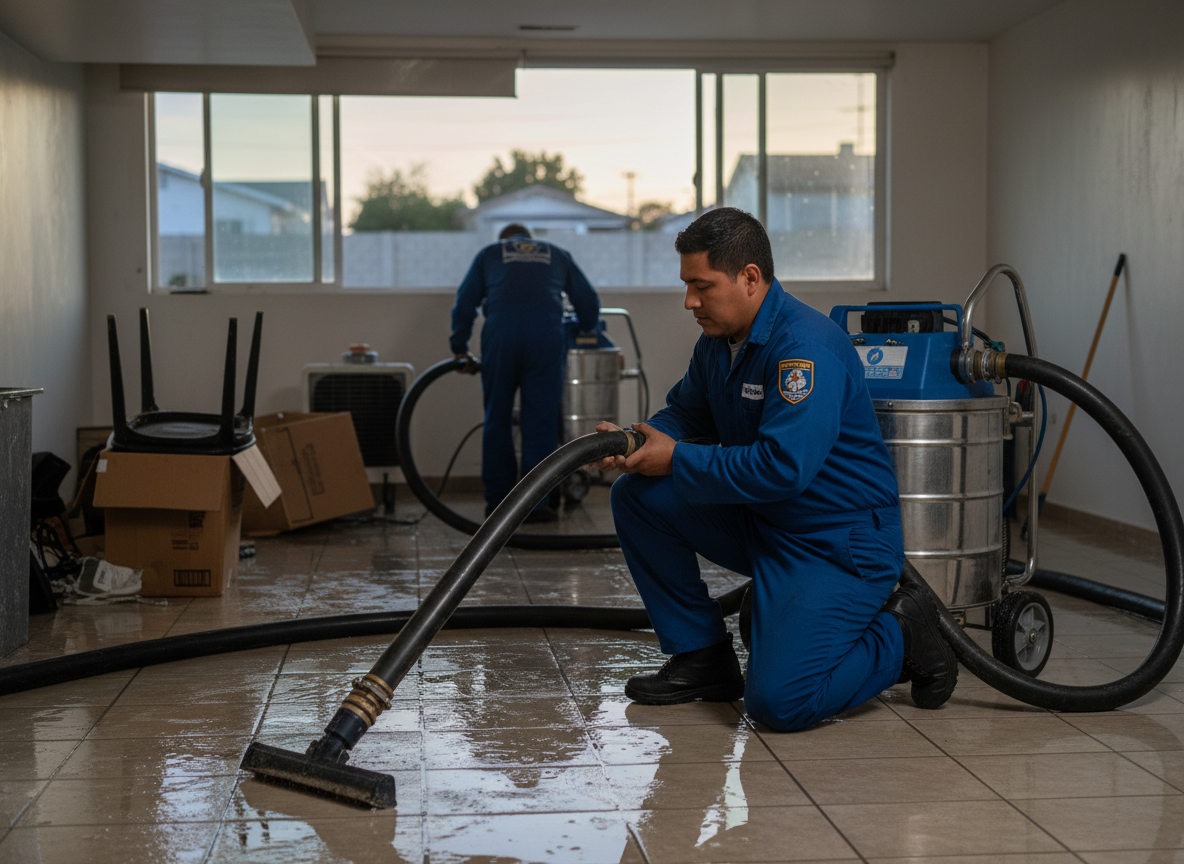
San Ysidro's older housing stock, especially single-story homes built before 1970 near the San Ysidro Port of Entry and Downtown, often features slab foundations and limited crawl spaces that trap water after pipe bursts or appliance leaks. Extraction crews must use submersible pumps and moisture meters to pull water from under slabs without damaging the surrounding soil conditions common in this flat coastal zone. The mild Mediterranean climate keeps temperatures moderate year-round, but persistent humidity from nearby Chula Vista and National City slows evaporation and raises the risk of hidden mold in wall cavities.
Technicians working extraction jobs in the San Ysidro Port of Entry area frequently encounter commercial buildings with concrete tilt-up walls and shared drainage lines that allow water to migrate between units. Industrial vacuums rated for high-volume removal are required when storm runoff or sewer backups hit during winter rains, and crews must separate gray water from black water to meet San Diego County disposal rules. Edge cases include water that travels under Larsen Field-adjacent properties through utility trenches, requiring extended drying times and targeted air movers placed along the slab edges.
Homeowners in San Ysidro often overlook how the area's proximity to the border crossing increases foot traffic and occasional plumbing strain on older galvanized lines. Extraction work here prioritizes quick containment to protect nearby structures, followed by HEPA filtration during drying to handle the fine dust typical of local soil. Crews document moisture readings at multiple depths because the coastal air can mask lingering dampness in drywall and baseboards for days after visible water is gone.
Technician insight
In San Ysidro, the thing that catches most people out with water extraction is how the mild coastal Mediterranean climate keeps humidity high enough that slab foundations near the Port of Entry stay damp for weeks unless you run equipment longer than inland jobs require.
Kitchen Leak in Downtown San Ysidro
A pipe failure under a kitchen slab sent water into adjacent rooms of a pre-1970 home. Extraction revealed migration along utility trenches toward the street. Crews used targeted pumps and dehumidifiers calibrated for local humidity, then monitored readings for five days until levels stabilized.
How it works
- 1
Initial Assessment
Technicians arrive within hours, inspect affected zones in San Ysidro homes or businesses, and map water migration paths using meters.
- 2
Water Removal
Industrial pumps and vacuums extract standing water from slabs, carpets, and wall cavities while separating water types for proper disposal.
- 3
Drying and Monitoring
Air movers and dehumidifiers run continuously, with daily moisture checks to confirm drying progress in the local humidity.
- 4
Final Clearance
Final readings confirm safe moisture levels before any reconstruction begins, with documentation provided to the property owner.
Pricing
Upfront quotes after inspection based on water volume, access difficulty, and drying duration.