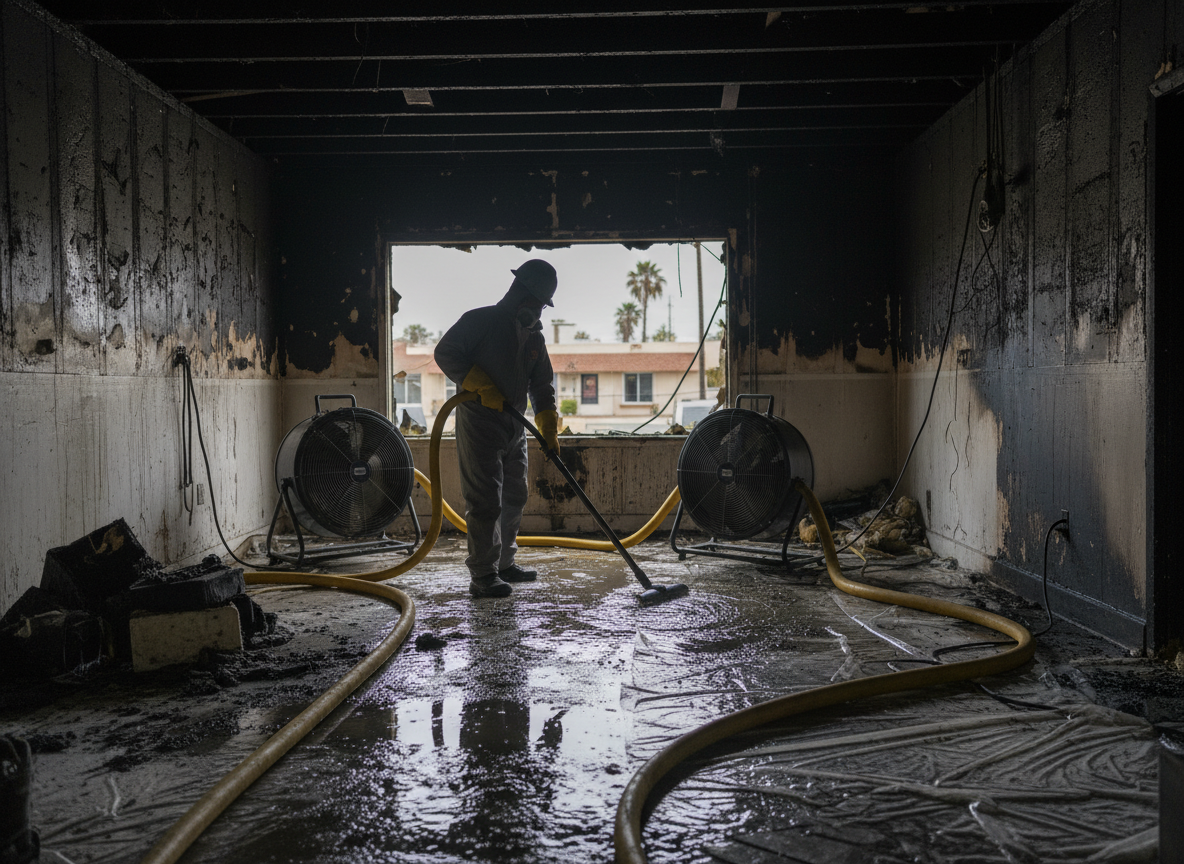
Firefighting efforts in San Ysidro often introduce large volumes of water into older stucco and wood-frame homes common in Downtown San Ysidro and near the San Ysidro Port of Entry. This water quickly migrates into wall cavities, under flooring and through ceilings, especially in the mild coastal Mediterranean climate where evaporation rates stay low even in winter. Without rapid extraction and drying, residual moisture combines with soot to create corrosive conditions that damage wiring, insulation and framing before visible signs appear.
Technicians begin by mapping moisture with thermal imaging and probes calibrated for San Diego County construction types, then isolate affected zones to prevent cross-contamination into unaffected rooms. In neighborhoods close to Larsen Field or the border crossing, narrow lots and shared walls mean water can travel laterally into adjoining units, requiring coordinated drying across multiple properties. Negative air machines and desiccants are staged to pull humidity while HEPA filtration captures soot particles that would otherwise re-settle during demolition.
After water removal, porous materials saturated with smoke residue are removed and disposed according to San Diego County guidelines, while salvageable surfaces receive antimicrobial treatment followed by air scrubbing. Final verification includes moisture readings below 12 percent and clearance testing for particulates before any reconstruction begins, ensuring the home meets habitability standards for Chula Vista and National City residents who sometimes cross into San Ysidro for service.
Technician insight
In San Ysidro, the thing that catches most people out with water damage remediation after fire is how the mild coastal Mediterranean climate keeps humidity trapped inside older stucco homes near the Port of Entry, letting hidden moisture behind shared walls turn into mold before homeowners notice anything wrong.
Suppression water in a Downtown San Ysidro duplex
Fire crews used water on a kitchen blaze that traveled through ceiling joists into the upstairs unit. We found elevated moisture in shared walls and under vinyl flooring that had wicked soot residue into the subfloor. Extraction, targeted drying and selective material removal cleared the hidden pockets within four days, allowing both units to pass clearance testing without further demolition.
How it works
- 1
Emergency Assessment
Arrive within hours to document water migration paths, test moisture levels in walls and floors, and identify soot deposits that accelerate corrosion in San Ysidro's older housing stock.
- 2
Water Extraction and Containment
Remove standing water with truck-mounted pumps and set up containment barriers to stop soot and moisture from spreading into unaffected areas near the Port of Entry.
- 3
Drying and Dehumidification
Deploy industrial air movers and dehumidifiers calibrated for the mild local climate, monitoring daily until readings confirm hidden cavities are dry.
- 4
Soot Removal and Antimicrobial Application
Clean affected surfaces, treat with EPA-registered antimicrobials, and verify clearance before any reconstruction work begins.
Pricing
Upfront quotes provided after inspection; final cost depends on extent of hidden moisture and materials affected.