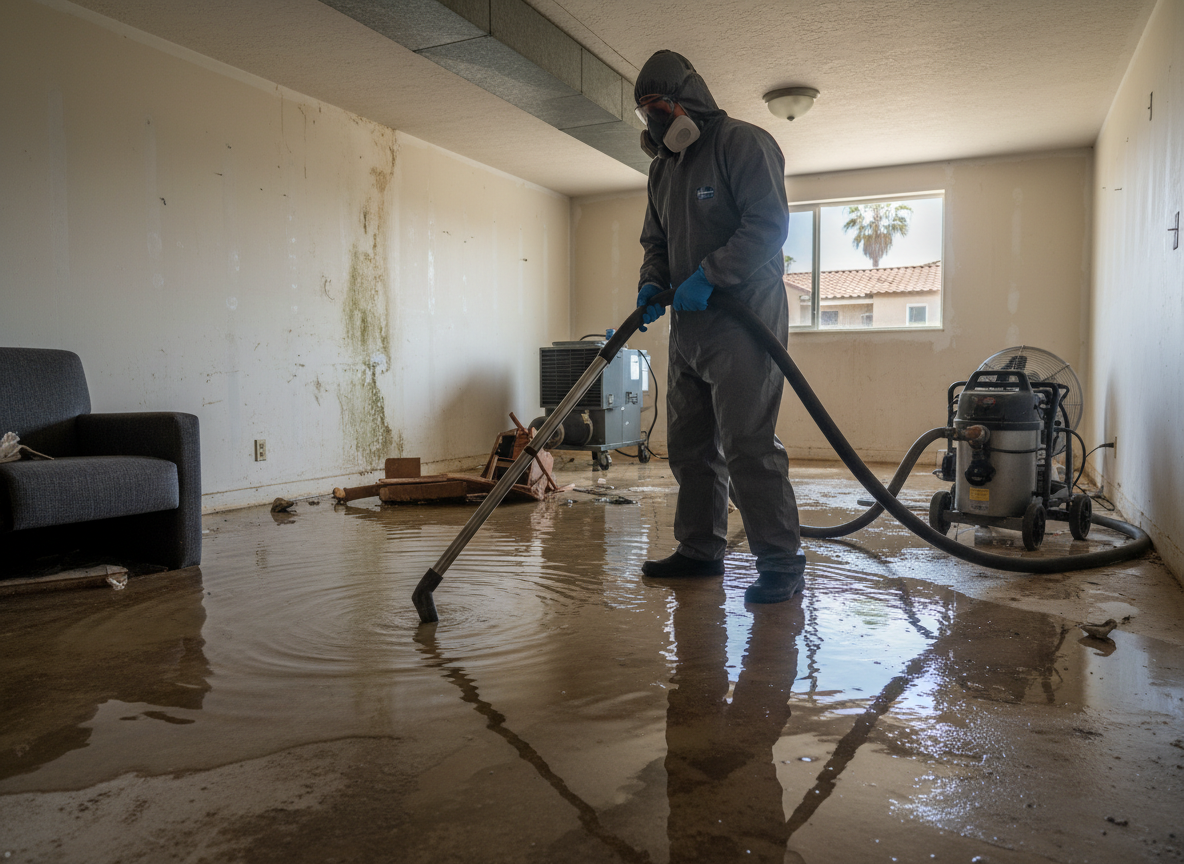
San Ysidro sits in a mild coastal Mediterranean climate where winter rains can arrive quickly and linger. Older housing stock near the San Ysidro Port of Entry and in Downtown San Ysidro often features slab foundations and limited crawl spaces that trap water after even moderate storms. Water cleanup services here begin with rapid extraction to prevent migration into neighboring units common in the dense blocks around Larsen Field. Technicians map moisture with meters because hidden saturation behind stucco or in shared walls can reach properties in Chula Vista or National City if left unchecked.
San Diego County building practices in these neighborhoods mean many structures lack modern vapor barriers. When water enters through roof penetrations or plumbing failures, it travels along concrete slabs and into wall cavities faster than in newer builds farther north. Our crews focus on negative air and dehumidification sized for the smaller footprints typical of San Ysidro lots. This approach keeps secondary damage from affecting adjacent properties while respecting the tight setbacks found near the border crossing.
Cleanup crews must also account for the area’s occasional high groundwater near the port. After heavy rain, standing water can reappear in garages and low-lying yards along San Ysidro Boulevard. Extraction equipment is staged to handle both initial flood volumes and the slower seepage that follows. Every job includes documentation of affected materials so property owners can see exactly what was removed and dried.
Coordination with local utility shutoffs is routine because many homes still use older electrical panels that sit close to grade. Technicians isolate power before beginning work and restore service only after moisture readings drop below risk thresholds. This step-by-step process protects both crews and residents in the compact blocks around the Port of Entry.
Technician insight
In San Ysidro, the thing that catches most people out with water cleanup services is how fast moisture travels along the slab foundations in the older homes near the Port of Entry. A leak that starts in a bathroom can reach the garage slab and then the neighbor’s unit before anyone notices because the tight lot lines leave almost no buffer space.
Port of Entry Area Slab Leak
Water appeared under the kitchen floor of a single-story home two blocks from the San Ysidro Port of Entry. Extraction removed standing water the same day. Moisture mapping showed saturation had reached the shared wall with the adjacent unit. Targeted drying and negative air kept the problem contained; final readings confirmed the slab and walls were dry within four days.
How it works
- 1
Assessment and Safety Shutoffs
Technicians arrive at the property and locate the water source, then isolate electrical and gas lines before any extraction begins.
- 2
Water Extraction
Standing water is removed with portable pumps and wands suited to slab-on-grade homes common in Downtown San Ysidro.
- 3
Moisture Mapping and Drying
Meters identify hidden moisture in walls and floors; air movers and dehumidifiers are placed to dry the structure without spreading contaminants to neighboring units.
- 4
Final Verification
Readings are taken again and documented; any remaining wet materials are noted for the owner before equipment is removed.
Pricing
Upfront quotes provided after inspection; final cost depends on affected square footage and drying duration.