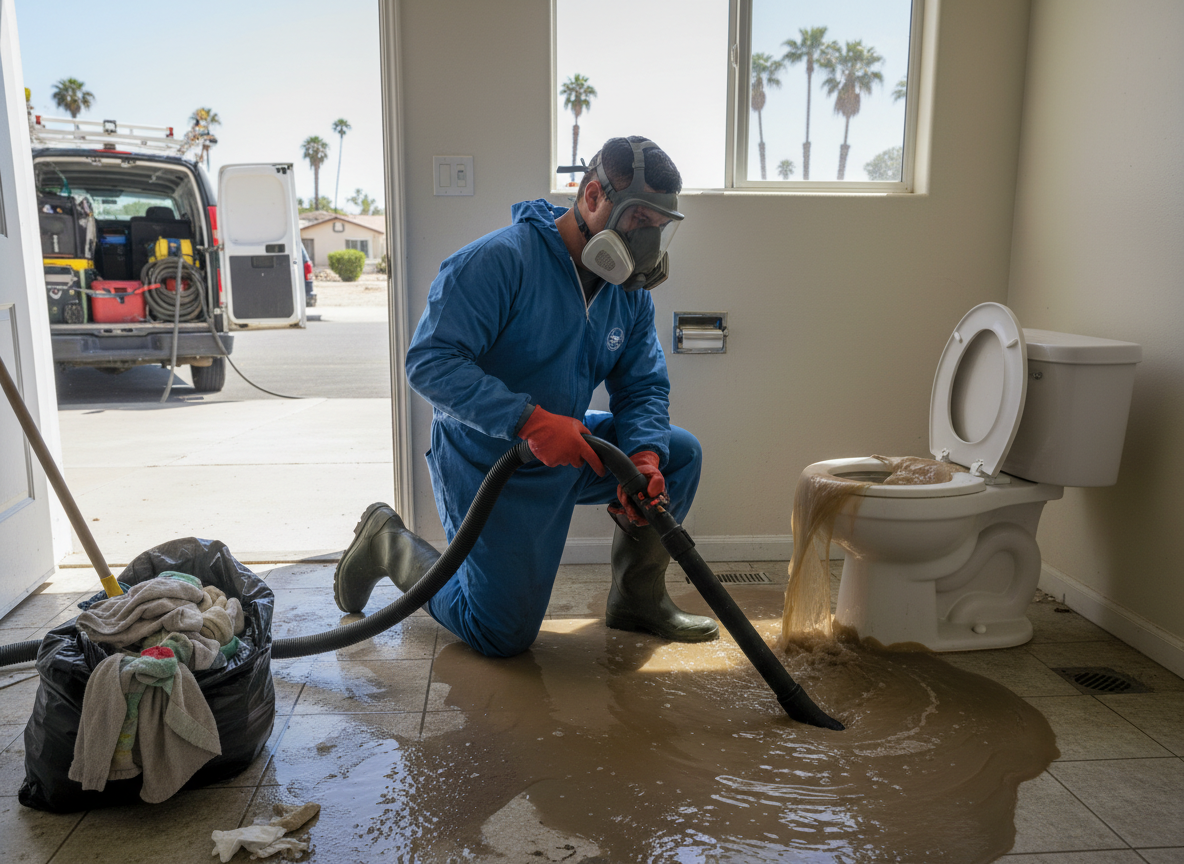
Toilet overflows in San Ysidro often involve older cast-iron or galvanized lines common in homes built near the San Ysidro Port of Entry and in Downtown San Ysidro. Water quickly migrates under vinyl or tile floors into the slab or crawlspace, and the mild coastal Mediterranean climate keeps humidity high enough that drying takes longer than inland parts of San Diego County. Technicians pull baseboards, use moisture meters on subfloors, and set up air movers and dehumidifiers sized for the square footage affected.
Edge cases include overflows that reach shared walls in duplexes along W San Ysidro Blvd or seep toward Larsen Field properties where grading can direct water back toward foundations. Contaminated black water requires full removal of affected carpet padding and underlayment; skipping this step leads to recurring odors within days. We separate salvageable contents, bag porous materials for disposal, and document moisture readings at multiple depths before any reconstruction begins.
Code notes matter when the overflow travels into electrical outlets or HVAC returns; San Diego County inspectors expect GFCI protection and proper drying verification before walls are closed. Homeowners sometimes attempt DIY extraction with shop vacs, which leaves hidden moisture in the joist bays and promotes mold within 48 hours in our climate. Professional equipment reaches behind cabinets and under toilets where standing water hides.
Technician insight
In San Ysidro the thing that catches most people out with toilet overflow cleanup is how quickly water travels under the slab in older Downtown San Ysidro homes near the Port of Entry. Our mild coastal Mediterranean climate keeps the ground damp longer than people expect, so hidden moisture in the subfloor can turn into a mold issue within a week if we do not pull baseboards and run equipment long enough.
Overflow Near Larsen Field
Water from a second-floor toilet reached the first-floor living room and kitchen in a home off San Ysidro Blvd. We found moisture had wicked into the slab edge and under the kitchen cabinets. Extraction, targeted drying, and removal of affected underlayment stopped further migration toward the foundation; the homeowner was back in the space within five days.
How it works
- 1
Arrival and Containment
Technicians arrive 24/7, shut off water if needed, and set up containment barriers to keep contaminated water from spreading into unaffected rooms.
- 2
Extraction
Standing water is removed with truck-mounted pumps and wands, followed by removal of saturated carpet, padding, and baseboards.
- 3
Moisture Mapping
Infrared cameras and meters locate hidden moisture in subfloors, walls, and cabinets around the San Ysidro home.
- 4
Drying and Monitoring
Air movers, dehumidifiers, and heaters run until readings return to normal; daily checks prevent mold in the coastal humidity.
- 5
Final Sanitation
Affected areas receive antimicrobial treatment and a final walkthrough before contents are returned.
Pricing
Pricing depends on the volume of water, affected square footage, and whether structural drying or contents handling is required; we provide an upfront assessment before work begins.