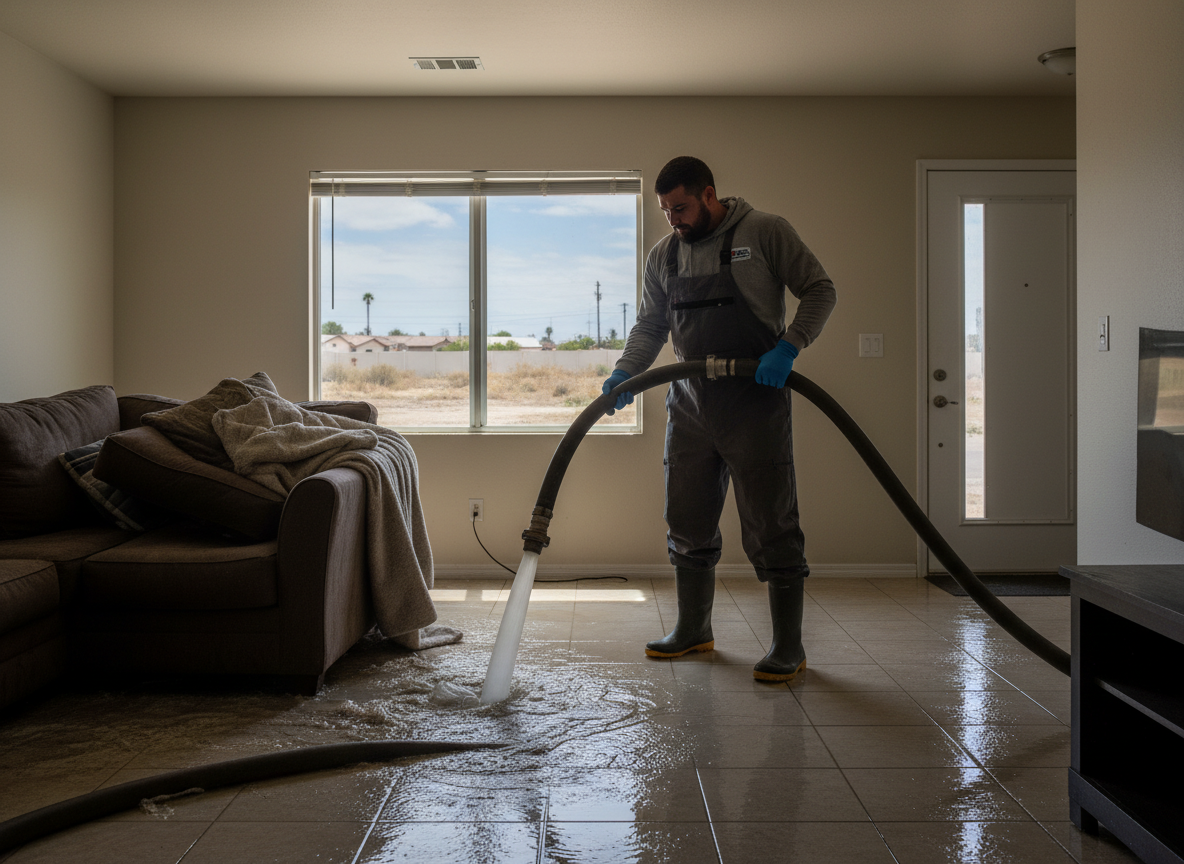
Rapid water extraction in San Ysidro must account for the older slab-on-grade homes built in the 1950s and 1960s around Downtown San Ysidro and the San Ysidro Port of Entry area. These structures often have limited access points under cabinets and appliances, so technicians rely on subfloor moisture meters and directional air movers rather than standard carpet wands. The mild coastal Mediterranean climate keeps relative humidity elevated year-round, which means even small volumes of water left behind can migrate into wall cavities within hours and reach neighboring units in multi-family buildings common near Larsen Field.
Work near the border crossing frequently involves properties with mixed concrete and wood foundations that sit close to the water table. Extraction crews stage truck-mounted units on W San Ysidro Blvd to pull water before it reaches shared sewer laterals that run toward Chula Vista and National City. Edge cases include hidden moisture trapped behind stucco that was applied directly to masonry in the 1960s stock; without thermal imaging these pockets are missed and later produce musty odors that travel between units.
San Diego County code requires documentation of moisture levels before any wall or flooring removal, so extraction logs become part of the job file for insurance adjusters. In practice this means crews photograph every reading and note the exact location of each extraction point relative to the Port of Entry corridor where traffic vibration can shift temporary barriers.
Technician insight
In San Ysidro, the thing that catches most people out with Rapid water extraction is water that travels under the slab and resurfaces in the neighbor's unit because many 1960s homes along the Port of Entry corridor share footings and the soil stays damp from the coastal climate.
Pipe failure near Larsen Field
Water from a laundry line break spread under a 1962 slab home two blocks from Larsen Field. Extraction units removed the bulk volume within four hours, but moisture had reached the shared wall with the adjoining unit. Targeted drying and daily readings kept the issue from affecting the neighbor and allowed the homeowner to avoid full floor replacement.
How it works
- 1
Site Assessment
Technicians arrive within the hour, map water migration using moisture meters, and identify slab edges or foundation seams typical in San Ysidro homes built before 1970.
- 2
Water Removal
Truck-mounted extraction units pull standing water while smaller wands reach under cabinets and into closets without disturbing original tile or hardwood that is hard to match in older San Ysidro properties.
- 3
Moisture Verification
Readings are taken at multiple depths in the slab and wall cavities, with notes on any water that may have reached shared walls common in the Port of Entry neighborhood.
- 4
Equipment Setup
Air movers and dehumidifiers are placed to create directed airflow that accounts for the consistent coastal humidity and prevents re-wetting from the high water table.
Pricing
Pricing depends on water volume, access under slabs, and whether shared walls in older San Ysidro buildings require additional drying time.