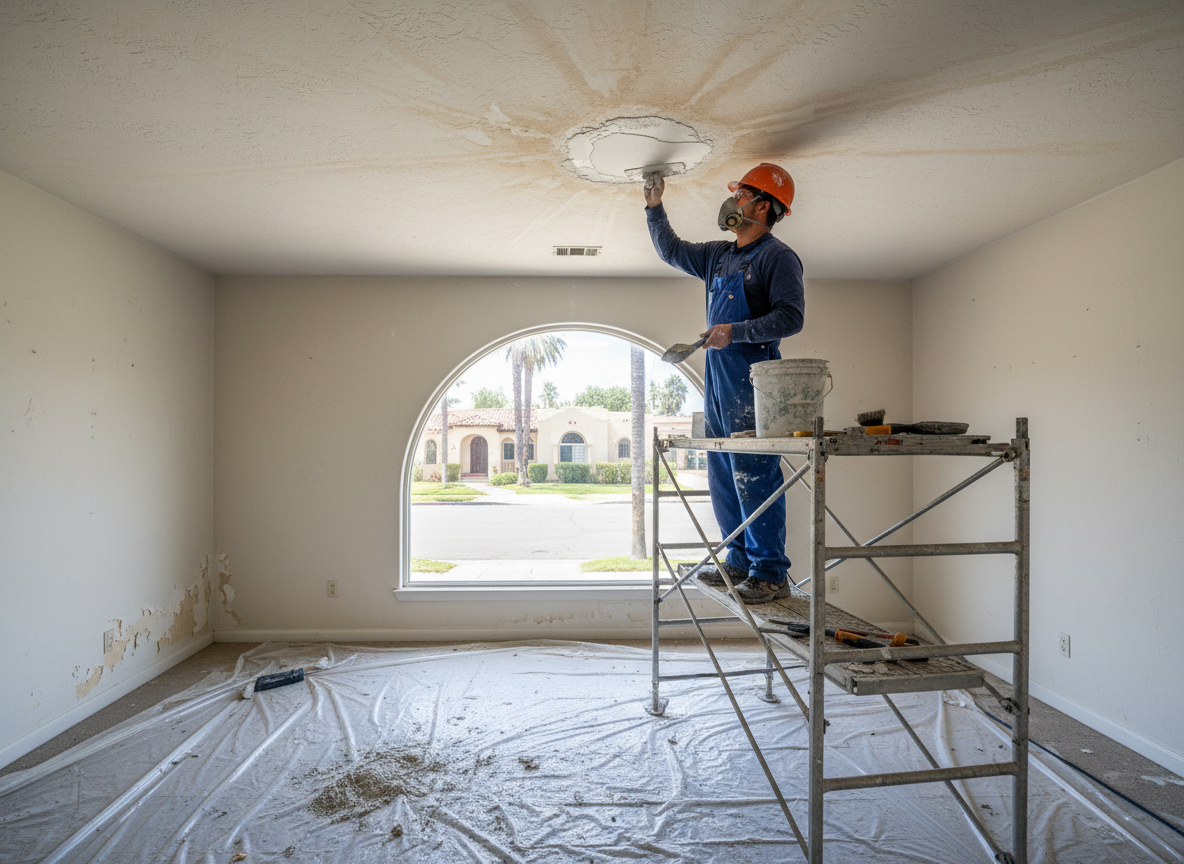
In San Ysidro homes near the San Ysidro Port of Entry and Larsen Field, ceiling water damage often starts from roof penetrations or upstairs plumbing that migrates through stucco and older plaster ceilings common in San Diego County properties built before the 1980s. The mild coastal Mediterranean climate keeps temperatures moderate but brings frequent marine layer moisture that can prolong drying times and encourage hidden mold growth above drywall. Technicians must cut access points carefully to avoid disturbing load-bearing lath and plaster while checking for compromised joists, especially in two-story homes close to the border crossing where vibration from heavy traffic can worsen existing cracks.
Repair work here frequently involves replacing sections of ceiling in kitchens and bathrooms where condensation from the Port of Entry area's higher humidity meets cooler interior air. Materials matter because many San Ysidro residences use textured ceilings that require matching during patching to avoid visible seams after painting. We always test for active leaks first by isolating supply lines and checking roof flashings around chimneys, since even small ongoing drips from seasonal coastal fog can re-soak insulation batts and create musty odors that travel into living spaces.
Code considerations in San Diego County require proper ventilation and vapor barriers when rebuilding ceilings over wet areas to prevent future condensation issues. Edge cases include multi-unit buildings near Downtown San Ysidro where water can travel laterally through shared ceiling cavities from a neighbor's unit, requiring coordination before repairs begin. Homeowners in National City and Chula Vista often see similar patterns but San Ysidro's older stock and proximity to the port create faster deterioration once moisture enters the assembly.
Technician insight
In San Ysidro, the thing that catches most people out with Ceiling water damage repair is how the mild coastal Mediterranean climate keeps humidity high enough that insulation stays damp for weeks after the leak stops, especially in pre-1970 homes near the Port of Entry where plaster ceilings hide the moisture until it stains through.
Port-area apartment ceiling leak
Water from a second-floor supply line seeped through a cracked joint and soaked the kitchen ceiling below in a Downtown San Ysidro building. We isolated the line, removed the saturated section, dried the cavity, and rebuilt the ceiling to match the surrounding texture without disturbing neighboring units.
How it works
- 1
Initial Assessment
Inspect ceiling surfaces, trace water source using moisture meters, and document damage extent in San Ysidro properties.
- 2
Water Source Isolation
Shut off affected lines or tarp roof sections to stop active leaks before any demolition begins.
- 3
Drying and Containment
Set up air movers and dehumidifiers while isolating the work area to protect adjacent rooms from dust and spores.
- 4
Repair and Finish
Remove damaged drywall or plaster, replace insulation if needed, patch to match existing texture, and prime for painting.
Pricing
Cost depends on square footage affected, access difficulty, and whether mold remediation is required alongside the repair.