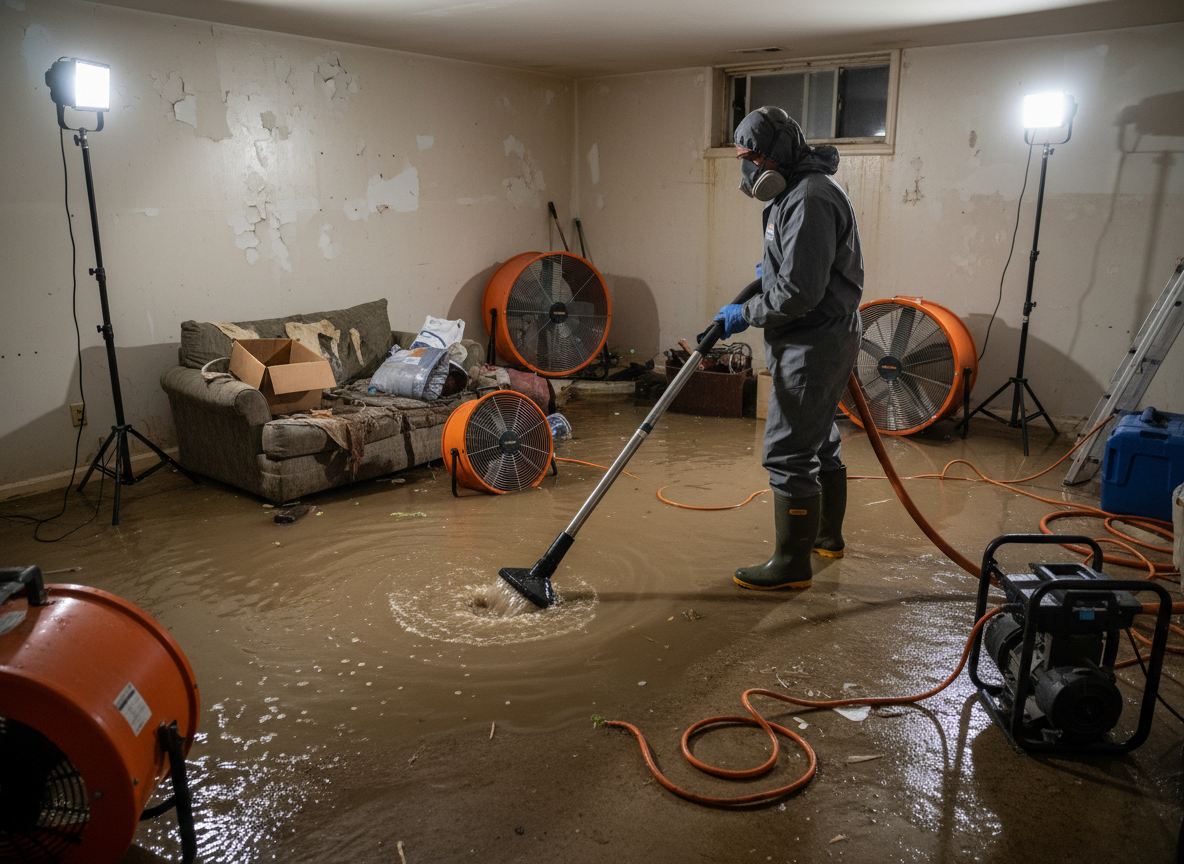
Basement floods in San Ysidro often trace to heavy winter rains overwhelming older drainage around homes built near the San Ysidro Port of Entry and in Downtown San Ysidro. The mild Mediterranean climate keeps soil moist year-round, so water lingers in foundations and encourages mold growth within 48 hours if not addressed. Technicians start with moisture mapping across concrete slabs and block walls common in San Diego County border neighborhoods, then use air movers and dehumidifiers sized for the confined space to pull humidity below 50 percent before hidden pockets develop.
Work near Larsen Field or along routes to Chula Vista and National City adds variables like compacted clay soils that slow natural drainage and occasional runoff from the port area during storms. Crews isolate electrical panels early because many San Ysidro basements share circuits with upstairs units and older wiring. After extraction, antimicrobial treatments target porous materials such as drywall and insulation that absorb water quickly in this humidity, followed by daily readings until levels match unaffected rooms.
Final steps include removing damaged baseboards and checking for delamination in subfloors before any reconstruction begins. Homeowners in the 92173 zip see fewer issues when they keep French drains clear of debris from nearby landscaping, a detail that changes drying times dramatically compared to drier inland parts of the county.
Technician insight
In San Ysidro, the thing that catches most people out with Basement flood cleanup is how the clay-heavy soil around older homes near the Port of Entry holds moisture long after rain stops, so extraction alone rarely dries the space without extended dehumidification that many homeowners underestimate.
Runoff Flood After Winter Storm
Water entered a basement near Downtown San Ysidro after heavy rain sent runoff along the port access road. Assessment showed saturation in block walls and slab edges. Extraction and targeted drying over four days prevented mold spread into living areas above, restoring the space without full demo.
How it works
- 1
On-Site Assessment
Technicians arrive within hours, inspect the basement for water depth, affected materials, and hidden moisture using meters while noting proximity to the Port of Entry or Larsen Field.
- 2
Water Extraction
High-capacity pumps and wands remove standing water from slabs and behind walls before it migrates into neighboring rooms or soil around San Ysidro foundations.
- 3
Drying and Monitoring
Industrial air movers and dehumidifiers run continuously with daily moisture checks until readings stabilize, accounting for the persistent coastal humidity.
- 4
Sanitization and Clearance
Antimicrobial application and final verification ensure no residual moisture remains before handing the space back for repairs.
Pricing
Upfront quotes after inspection; costs vary by water volume, affected square footage, and drying duration.