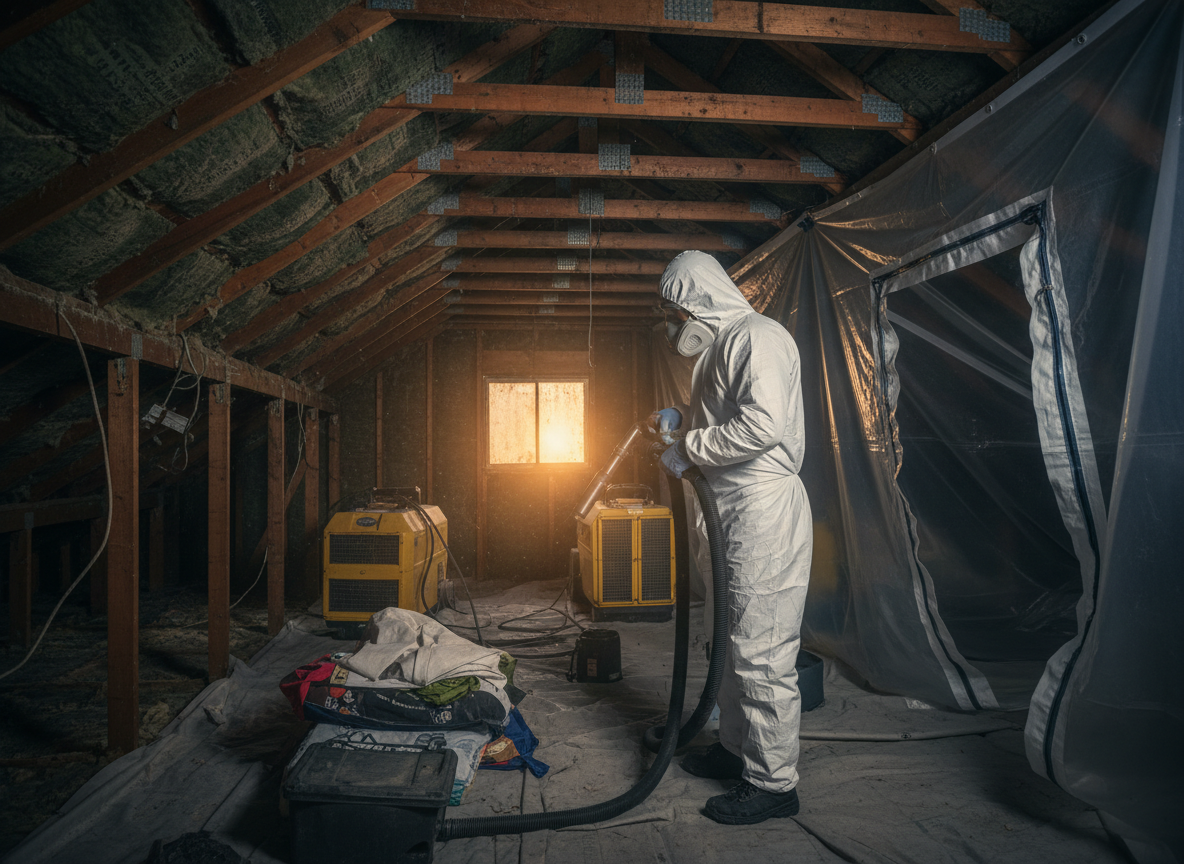
Attic mold in San Ysidro homes often starts from minor roof leaks or condensation that builds slowly under the mild coastal Mediterranean climate. Older housing stock near the San Ysidro Port of Entry and Downtown San Ysidro frequently has limited attic ventilation and older insulation that traps moisture against rafters. Technicians must inspect for hidden growth behind knee walls and around recessed lights while protecting the living space below from spores during removal.
Work in this border-adjacent area requires careful containment because many homes sit close to neighboring properties and have shared rooflines. Removal crews use negative air machines and HEPA filtration to keep particles from drifting toward Larsen Field or traffic corridors. After physical cleaning, antimicrobial treatments are applied to wood surfaces, followed by drying with dehumidifiers sized for the attic volume typical in San Ysidro construction.
Homeowners in San Ysidro sometimes discover mold only after noticing musty odors on the second floor or staining on ceilings. Because the climate rarely produces dramatic storms, leaks can go unnoticed for seasons until insulation is saturated. Proper remediation includes fixing the moisture source, usually a roof penetration or bathroom exhaust vent, before any new insulation is installed.
Technician insight
In San Ysidro, the thing that catches most people out with attic mold remediation is how the mild coastal Mediterranean climate lets slow condensation build in older attics near the Port of Entry without any obvious roof leak. Homeowners often miss the poor ventilation common in homes around Larsen Field until the insulation is fully saturated.
Hidden Condensation in Downtown San Ysidro Attic
A homeowner in Downtown San Ysidro noticed ceiling stains after a neighbor's roof work. Inspection revealed condensation mold along the north rafters caused by blocked soffit vents typical in the area's older housing. Crews contained the attic, removed wet insulation, cleaned rafters, and restored ventilation. The space passed clearance testing with no recurrence after the moisture source was corrected.
How it works
- 1
Initial Inspection
Technicians access the attic from the San Ysidro home to map moisture sources and visible mold growth using moisture meters and borescopes.
- 2
Containment Setup
Plastic barriers and negative air machines isolate the attic to prevent spores from entering living areas in the Port of Entry neighborhood.
- 3
Mold Removal
Affected insulation is removed, wood surfaces are cleaned and treated, and debris is bagged for disposal following local San Diego County guidelines.
- 4
Drying and Verification
Dehumidifiers and air movers dry the space, followed by post-remediation testing to confirm mold levels are within acceptable ranges.
Pricing
Cost depends on attic size, mold extent, and access difficulty in San Ysidro homes.